Affordability Crisis: A Reader
一月 03, 2026
Causes
Continued inflation
Inflation rate has been high since before COVID-19. Although it has been much slower in recent months, it remained relatively high (2.7% in Nov 2025).
Put another way: The inflation rate since Q4 2019 has risen about twice as fast as the Federal Reserve's optimal rate, according to Mark Zandi, chief economist at Moody's.
-- Affordability is a buzzword right now --- these charts show why
And businesses generally don't cut prices even if inflation has decelerated.
Health insurance subsidies expiring
The issue may last into 2026.
Enhanced premium subsidies for 22 million Americans enrolled in health insurance via the Affordable Care Act marketplace are poised to disappear at the end of 2025, leading insurance premiums to more than double for the average recipient.
-- Affordability is a buzzword right now --- these charts show why
War in Ukraine
Some increases in food and fuel prices may be attributed to the Ukraine War.
Shortage in housing supply
Today, both rental and homeowner vacancy rates---the share of total housing stock available for rent and sale respectively---are below those seen in the two decades preceding the (2007-2009) crisis and the housing market collapse that triggered it.
These measures of housing stock availability point to a growing gap between supply and demand---the root of the affordability problem. Rents and mortgage payments are taking a bigger chunk of income, according to multiple measures, and the trend accelerated post-pandemic.
One important factor causing limited supply of housing is land use regulations in the US. These regulations often are decided locally, making it difficult to reform at a large enough scale.
Near the city centers, land supply is also declining, pushing up development costs. Lack of skilled labour in the construction industry also makes it more expensive to build houses. An opinion is that AI could have positive impacts in this regard, for it pushes would-be new white-collars into the construction business and other industries that need young, strong workers. The irony is not hard to see.
Impact
Democrats victories
Democrats have ridden the affordability issue to victories in recent elections, including the mayoral race in New York and gubernatorial contests in New Jersey and Virginia.
-- Affordability is a buzzword right now --- these charts show why
Middle-class cost of living problems
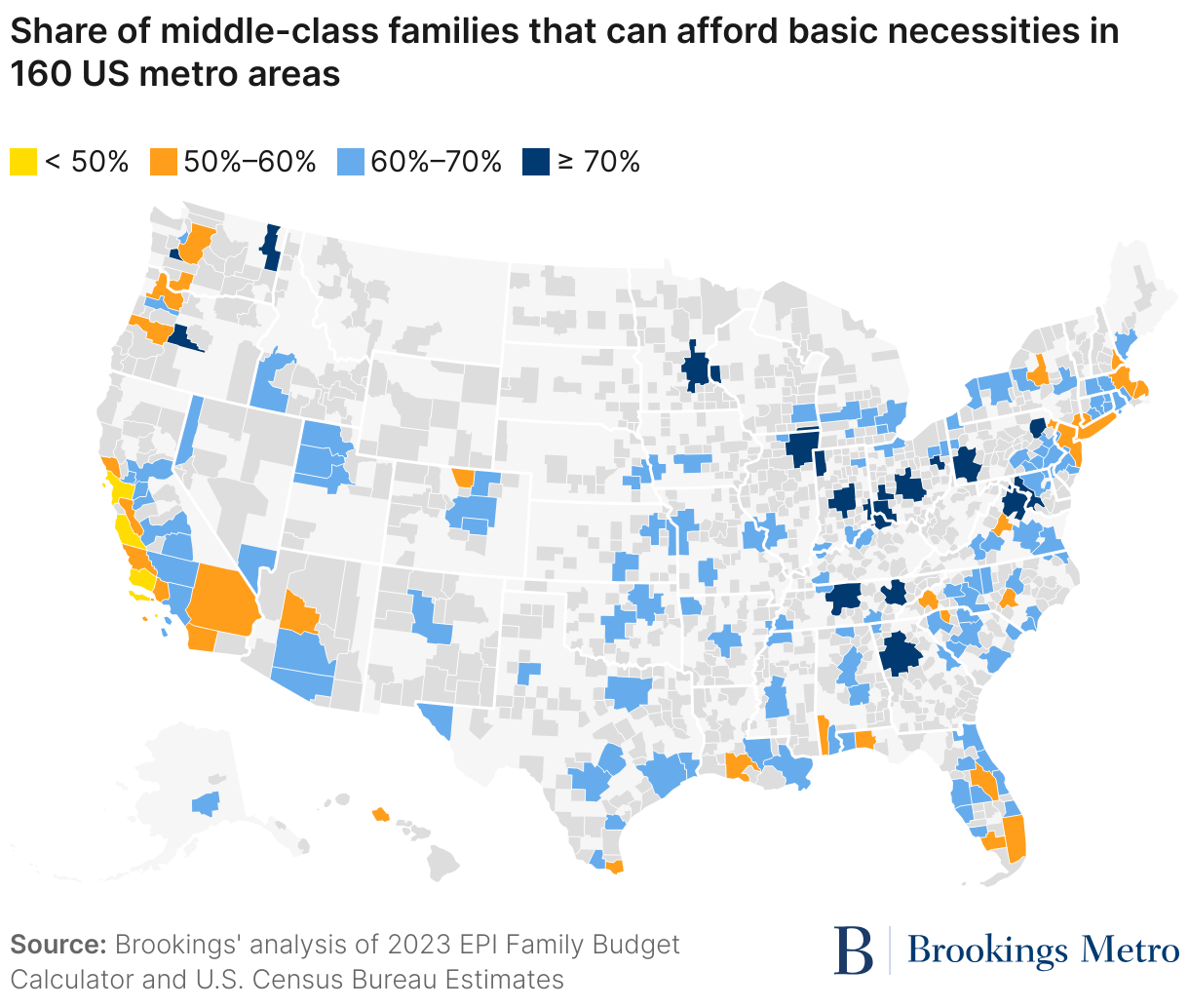
For other graphs, see In every corner of the country, the middle class struggles with affordability.
The affordability crisis make the middle-class families more susceptible to future shocks, and affects the long-term viability of the US economy.
Response
Most of these are policy recommendations instead of actions or implementations. Current administration makes it very unlikely that these measures can be taken nationwide.
Increase income
To increase incomes, policymakers could increase the federal minimum wage, which since 2009 remains stagnant at $7.25 per hour (or $2.13 per hour since 1996 for tipped workers).
-- In every corner of the country, the middle class struggles with affordability
Decrease living costs
At the national and state level, lowering costs for middle-class households could include universal health and child care as well as increased investments into public transportation and Supplemental Nutrition Assistance Program (SNAP) benefits.
-- In every corner of the country, the middle class struggles with affordability